WNC LogoWNC
ServicesSolutionsCompanyAcademyLabsUpdatesContact
Partner
Open Kanban
WNC LogoWNC

AI & automation partner. Made with care in Ukraine, Brazil and Canada.

daniel@we-nocode.com+38 (068) 758-94-22+38 (095) 411-95-37
Remote-first, worldwide

Services

  • Agentic AI Systems
  • AI-Native Software
  • AI Cloud Infrastructure
  • Consulting & Advisory
  • AI Training for Companies
  • AI Agents & Chatbots
  • Workflow Automation
  • RAG Pipelines
  • Performance Analytics
  • Web Development
  • Mobile Development
  • Desktop Development
  • Server Development
  • Embedded Firmware
  • Embedded Linux & SoC
  • Edge AI & TinyML
  • Wireless & Connectivity
  • Hardware Prototyping
  • IoT Solutions

Solutions

  • Atflow
  • Alt Auth
  • AdCrier
  • Pastukh
  • Olymp Hill

Portals

  • Client Portal
  • Investor Portal
  • Partner Portal

Company

  • About Us
  • Our Team
  • Testimonials
  • Investment
  • Blog
  • News
  • Careers
  • Locations
  • Contact

Labs

  • Miltech
  • AI Labs
  • Internet of Things
  • Robotics

Initiatives

  • Startup Program
  • Academy
  • Olymp Hill

© 2026 WNC (WeNoCode). All rights reserved.

🇺🇦Stand with Ukraine
All services

Proof of concept & feasibility

Find out if it’ll work before you build it.

A few focused weeks of R&D that answer one question: should you build this at all?

Every ambitious idea has one part that might not work — the model that may not be accurate enough, the integration that may not scale, the approach that may not hold up on real data. We spend a short, timeboxed engagement proving that part first, so you get a clear go / no-go and a cost estimate before you commit a full budget — not after. And if the evidence says don’t build it, we’ll tell you that too.
Let’s manage Open Kanban
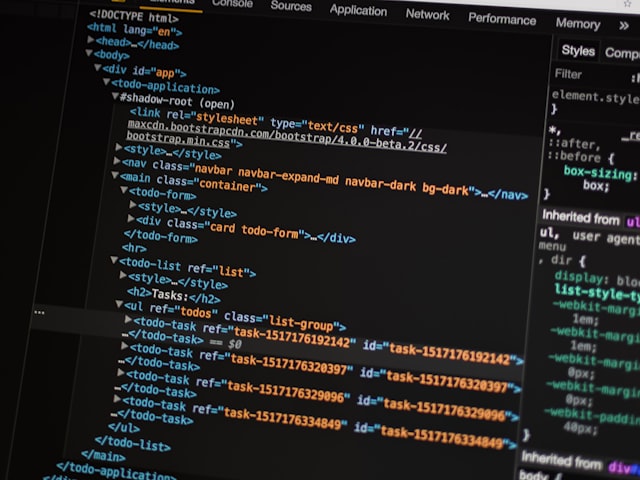
An engineer running a proof-of-concept experiment on screen

01 / What you walk away with

Certainty, before the expensive part.

01

Prove the riskiest part first

We find the one assumption most likely to sink the idea and test it on real data — before a single line of production code is written.

02

An honest go / no-go

A plain recommendation backed by evidence — and the confidence to say “don’t build this” when that’s the honest answer.

03

A cost and effort estimate you can trust

Once the unknowns are proven, we size the real build — scope, effort and timeline — so your budget is based on fact, not a guess.

04

Working code, not a slide deck

You get a running demo of the hard part, the code behind it and the data it ran on — something you can see work, not just read about.

02 / Stack

The technology we build with.

Industry-standard, boring in the good way: tools with a future, that the next engineer will know too.

Rapid build

  • Python

    Fast experiments and data work

  • TypeScript

    Throwaway UIs and integrations

  • Notebooks

    Readable, reproducible analysis

  • APIs & SDKs

    Off-the-shelf APIs and SDKs to skip the plumbing

Evaluation

  • Benchmarks

    Measured against a real baseline

  • A/B testing

    A/B comparisons of the options

  • Metrics & criteria

    Success criteria agreed up front

  • User testing

    A few real users, not just our opinion

Delivery

  • Working demo

    A working demo of the riskiest part

  • Feasibility report

    A written feasibility report

  • Cost & effort estimate

    A cost, effort and timeline estimate

  • Go / no-go recommendation

    A clear go / no-go recommendation

03 / Approach

How we build things that last.

01

Start with the riskiest unknown

We attack the single thing most likely to kill the idea first — if it fails, you’ve spent weeks, not a full build budget.

02

Timeboxed and fixed-scope

A few weeks, a set budget and a known end date. The point is a fast answer, so the engagement can’t quietly turn into the build.

03

Evidence over opinion

We agree the success criteria before we start and measure against a real baseline, so the recommendation rests on data you can check.

04

A clear go / no-go

You get a straight answer and the reasoning behind it — including the times we’ll tell you the idea isn’t worth building.

04 / Standards

Best practices we don’t skip.

We adhere to industry standards and proven methods on every project — they are what makes the estimate hold.

  • Attack the single assumption most likely to kill the idea first
  • Timebox the work — a few weeks, a fixed budget, a set end date
  • Write down what success looks like before we start building
  • Build the thinnest thing that proves the point, nothing more
  • Measure against a real baseline, not a hoped-for one
  • Keep the throwaway code honest — a proof of concept isn’t production
  • Say plainly when the evidence shows you shouldn’t build it
  • Hand over everything — code, data and report — so you can carry on with anyone

05 / Infrastructure

Where it runs, and how it stays up.

  • A working demo of the riskiest part, running on real data
  • A written feasibility report — what works, what doesn’t and why
  • A cost, effort and timeline estimate for the full build
  • An honest go / no-go recommendation, with the reasoning

Start

Not sure it’s worth building? Let’s find out.

Tell us the idea and the part you’re least sure about. A senior engineer — not a sales rep — writes back.

Let’s manage Rapid prototyping