
WNC LogoWNC
ServiciosSolucionesEmpresaAcademiaLabsContacto
Abrir Kanban

We No Code. We Architect.

Empezar un proyecto daniel@we-nocode.com
WNC LogoWNC

Socio de IA y automatización. Hecho con cuidado en EE. UU., Polonia, Estonia, Brasil y Ucrania.

daniel@we-nocode.com+38 (068) 758-94-22+38 (095) 411-95-37
Remoto ante todo, en cualquier parte del mundo

Soluciones

  • Atflow
  • Alt Auth
  • AdCrier
  • Pastukh
  • Olymp Hill

Portales

  • Portal de cliente
  • Portal de inversores
  • Portal de socios

Empresa

  • Sobre nosotros
  • Nuestro equipo
  • Casos de estudio
  • Testimonios
  • Inversión
  • Blog
  • Noticias
  • Empleo
  • Ubicaciones
  • Contacto

Labs

  • Miltech
  • AI Labs
  • Internet of Things
  • Robotics

Iniciativas

  • Startup Program
  • Academy
  • Olymp Hill

Servicios

Todos los servicios
IA
  • Sistemas de IA agéntica
  • Agentes de IA y copilotos
  • Servidores MCP
  • Pipelines RAG
  • Agentes de voz IA
  • Software nativo de IA
  • Automatización de flujos de trabajo
  • LLMOps y evals
  • Fine-tuning y modelos
  • IA documental
  • Visión por computador
Desarrollo
  • Desarrollo web
  • Desarrollo móvil
  • Desarrollo de SaaS y MVP
  • Diseño UI/UX y de producto
  • Integraciones y APIs
  • Desarrollo de e-commerce
  • Modernización legacy
  • QA y pruebas automáticas
  • No-code y low-code
  • Desarrollo de escritorio
Embebido e IoT
  • Soluciones IoT
  • Firmware embebido
  • Linux embebido y SoC
  • Edge AI y TinyML
  • Conectividad inalámbrica
  • Prototipado de hardware
  • Plataforma y nube IoT
  • Gestión de flota y OTA
  • IoT industrial (IIoT)
  • Seguridad IoT
Nube y datos
  • Ingeniería de datos
  • Infraestructura de IA en la nube
  • Desarrollo de servidores
  • DevOps y plataformas
  • Migración y FinOps
  • BI y dashboards
  • Analítica de rendimiento
  • Soporte y SRE
Seguridad
  • Pentesting
  • Red teaming de IA
  • Cumplimiento
  • Autenticación
  • Seguridad en la nube
  • Desarrollo seguro
  • Cadena de suministro
  • Auditorías de seguridad
  • Monitorización
  • Zero trust
  • Privacidad y RGPD
Consultoría
  • Consultoría y asesoría
  • CTO como servicio
  • Estrategia y gobierno IA
  • Due diligence técnica
  • Equipo dedicado
  • Formación en IA para empresas
I+D / innovación
  • Prueba de concepto y viabilidad
  • Prototipado rápido
  • Investigación en IA aplicada
  • Descubrimiento tecnológico

© 2026 WNC. Todos los derechos reservados.

🇺🇦Apoya a Ucrania

We No Code

Back to Blog
Why Soft Skills Matter More When AI Does the Routine
Team Culture min readNovember 10, 2026

Why Soft Skills Matter More When AI Does the Routine

AI is changing how we work, but not what makes teams effective. A balanced look at why technical and human skills work best together.

Anastasiia Nikulshyna

Anastasiia Nikulshyna

HR

AI tools are now part of everyday work for many teams. They help draft texts, summarize documents and speed up routine tasks. That naturally raises a question: what should we invest in as people and as teams?

Our view is simple: technical skills remain the foundation, and soft skills help us get more value from them.

Technical skills are still essential

Using AI well requires understanding the subject. A business analyst who knows the domain will notice when an answer looks wrong. A developer who understands the code will spot a risky suggestion. Tools don't replace this knowledge. They make it more useful in the hands of someone who has it.

Where soft skills come in

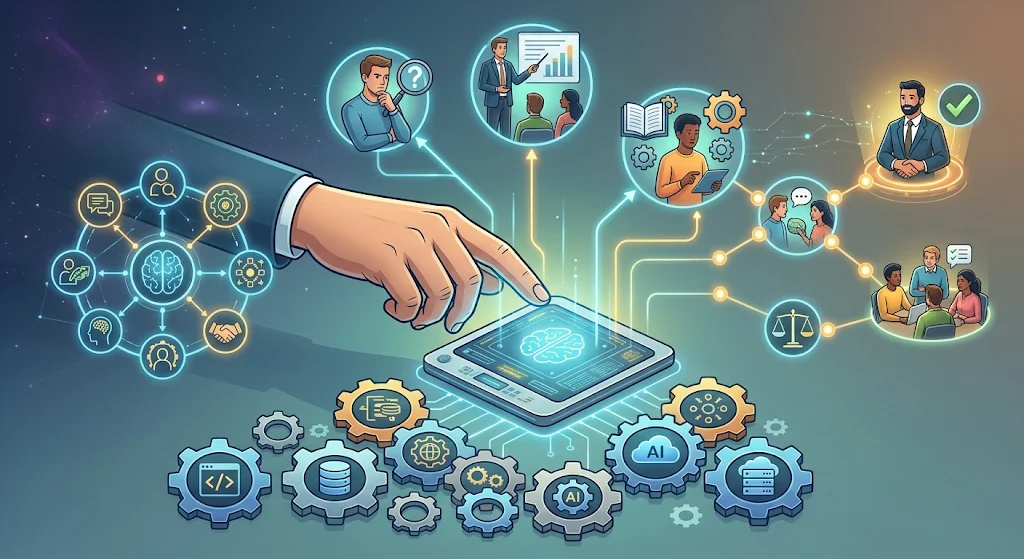
When tools handle more of the routine, a larger part of our time goes to things around the task itself:

  • Asking clear questions. A good result often starts with a well-framed request.
  • Checking and questioning. AI can sound confident and still be inaccurate, so someone needs to review the output with a critical eye.
  • Communicating. Turning a result into a clear message for a colleague or a client is part of the job.
  • Learning quickly. Tools change often, and curiosity helps us keep up.
  • Working together. Teams that share what works and admit what doesn't tend to learn faster.
  • Taking responsibility. A tool can suggest, but a person makes the final decision.

None of these replace technical expertise. They work alongside it.

What this can mean for teams

  • In hiring, it helps to look at both: what a person knows and how they approach problems, learn and work with others.
  • In growth, it's useful to give people chances to practice, for example by presenting results, mentoring a new colleague or leading a retrospective.
  • In culture, it helps to make questions welcome, including questions about AI-generated answers.
  • In recognition, it's worth appreciating people who make the whole team stronger, not only those who finish tasks fastest.

A balanced approach

It isn't a choice between technical and human skills. Strong teams need both: expertise to do the work well and people skills to do it together. As tools take on more routine tasks, the second part is likely to become more visible, and it's worth giving it the same attention we give to tools and certifications. 🌱

Tags
Aiteam culturefuture of workcritical thinking